Employees working at the United States Postal Service often rely on digital tools to manage their payroll and track earnings. One of the most important systems available is LiteBlue, where employees can access their salary details through the ePayroll feature. However, simply opening your pay stub is not enough. Many employees struggle to understand what each number, code, and section actually means.
If you have ever looked at your salary statement and felt confused about deductions, overtime, or final pay, you are not alone. The LiteBlue ePayroll system provides detailed payroll data, but interpreting that data correctly is the real challenge.
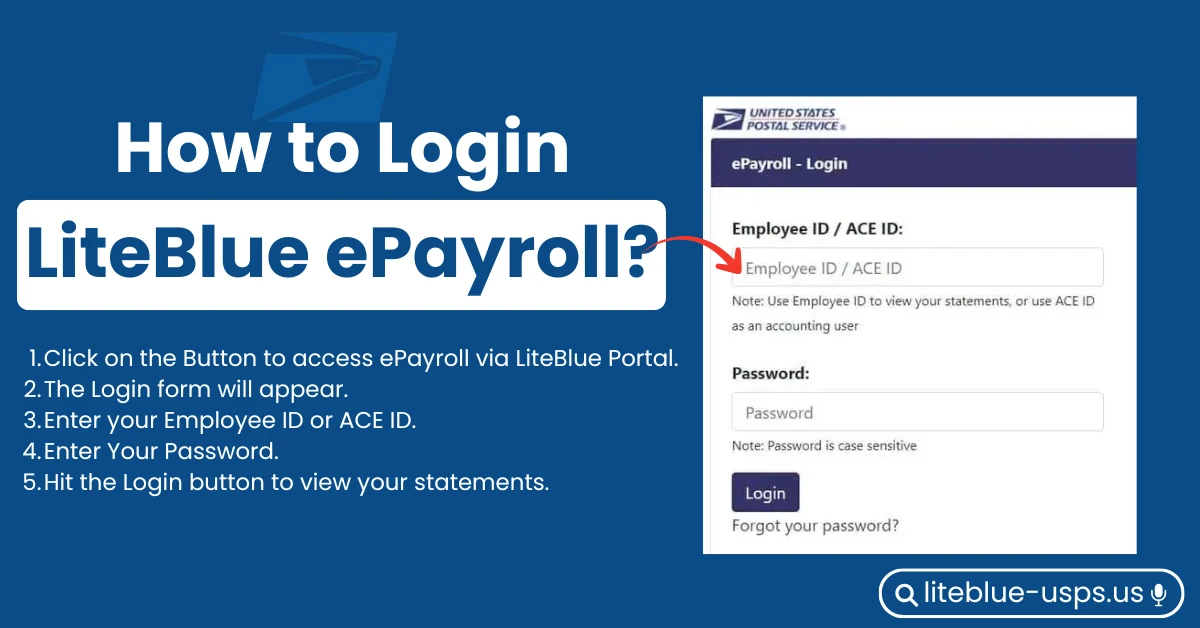
In this complete guide, you will learn how to read your USPS pay stub step by step, understand every section in detail, identify errors early, and take full control of your earnings and financial records.
What Is a USPS ePayroll Pay Stub?
A USPS pay stub is a digital record of your earnings and deductions for a specific pay period. It replaces traditional paper pay slips and provides detailed financial information including gross earnings (total income before deductions), net pay (amount deposited into your bank), federal and state taxes, retirement contributions, insurance deductions, work hours and overtime, and leave balances. This document is essential for financial planning, tax filing, and verifying your income.
Why Understanding Your Pay Stub Is Important
Many employees ignore the details of their pay stub and only check their final salary. This can lead to serious issues over time. Key reasons to understand your pay stub include detecting payroll errors early, verifying overtime payments, tracking deductions accurately, planning your monthly budget, and maintaining proof of income. Ignoring your pay stub can result in unnoticed mistakes that affect your earnings over time.
Structure of a USPS Pay Stub
Your ePayroll statement is divided into several important sections, each playing a critical role in understanding your salary.
| Section | Purpose |
|---|---|
| Employee Information | Identifies the employee |
| Pay Period | Shows work duration |
| Earnings | Displays total income |
| Deductions | Lists all reductions |
| Net Pay | Final payable amount |
Detailed Breakdown of Each Section
Employee Information
This section contains your personal and job-related details including your Employee ID (EIN), work location, and job position. Always verify this information to ensure it accurately reflects your current role and assignment.
Pay Period Information
This section shows the start date and end date of the pay period, along with the official payday. This helps you confirm that all your working days are included in the salary calculation.
Understanding the Earnings Section
The earnings section is where your total income is calculated. Overtime and special pay categories can significantly increase your total income, so always verify them carefully.
| Type | Description |
|---|---|
| Regular Pay | Payment for standard working hours |
| Overtime Pay | Extra hours beyond schedule |
| Holiday Pay | Work done on holidays |
| Night Differential | Extra pay for night shifts |
Deep Dive into Deductions
Deductions are amounts subtracted from your gross pay. Common types include federal income tax, state tax, health insurance premiums, retirement contributions (TSP), and union dues.
| Deduction | Purpose |
|---|---|
| Tax | Government obligations |
| Insurance | Medical coverage |
| Retirement | Future savings |
Gross Pay vs Net Pay Explained
Gross pay is the total amount earned before any deductions are applied. Net pay is the final amount actually deposited into your bank account after all deductions have been subtracted.
| Category | Amount |
|---|---|
| Gross Pay | $3,200 |
| Total Deductions | $900 |
| Net Pay | $2,300 |
Paid Hours Section Explained
This section shows how many hours you worked during the pay period, including regular hours, overtime hours, and leave hours. Even a small mistake in recorded hours can directly affect your salary, making this one of the most important sections to verify every pay period.
Leave and Retirement Section
This section provides information about your benefits, including your annual leave balance, sick leave, and retirement contributions. Tracking this section regularly helps you plan time off and monitor your long-term savings contributions.
Adjustments Section
Adjustments are used to correct previous payroll errors. Examples include missing overtime added later, incorrect deductions that have been fixed, and back pay adjustments from earlier pay periods. When you see an adjustment, review it carefully to understand what was corrected and why.
Understanding Payroll Codes
Payroll codes can be confusing for many employees. Here are the most common ones you will encounter on your pay stub.
| Code | Meaning |
|---|---|
| OT | Overtime |
| AL | Annual Leave |
| SL | Sick Leave |
Common Mistakes Employees Make
Many employees fail to review their pay stub properly. The most frequent mistakes are only checking the net pay, ignoring deductions, not verifying overtime, and forgetting to save records. Developing the habit of reviewing the full stub each pay period prevents these oversights from accumulating into larger financial errors.
Step-by-Step Guide to Verify Your Pay Stub
Follow this process every pay period: check your total working hours, verify overtime entries, review all deductions, match your net pay with your bank deposit, and look for any adjustments. Taking these five steps consistently will catch most errors before they go unaddressed.
When You Should Be Concerned
Take action immediately if you notice missing overtime, incorrect deductions, a lower-than-expected salary, or unusual adjustments that you do not recognize or cannot explain.
What to Do If You Find an Error
If you spot a discrepancy, act quickly. Take a screenshot of your pay stub, compare it with your personal work records, contact your supervisor, and report the issue to HR immediately. Early reporting significantly increases the chances of a quick and accurate correction before the next pay cycle.
Advanced Insights: How ePayroll Works Behind the Scenes
The ePayroll system is connected to multiple internal systems that process work hours data, payroll calculations, deduction rules, and benefit contributions. Because of this complexity, small delays or errors can sometimes occur. Understanding this helps explain why corrections may take a pay cycle to appear and why it is important to report issues as early as possible.
Benefits of Using the ePayroll System
The key advantages of ePayroll are 24/7 access to pay information, paperless record keeping, easy tracking of earnings over time, and improved financial transparency compared to traditional paper-based systems.
Financial Planning Using Pay Stub Data
Your pay stub is more than just a record of payment. You can use it to create a monthly budget, plan your savings, track monthly expenses, and prepare accurately for tax season. A few minutes spent reviewing your stub each period builds a much clearer picture of your financial position.
Frequently Asked Questions (FAQs)
Conclusion
Understanding your USPS pay stub is not optional — it is essential. While the LiteBlue ePayroll system provides complete access to your payroll information, the responsibility of verifying that information lies with you.
By learning how to read each section, interpret deductions, and track your earnings, you gain full control over your financial data. Instead of just checking your final salary, analyzing the full breakdown helps you detect errors, plan better, and stay financially secure. A few minutes spent reviewing your pay stub every pay period can prevent long-term issues and ensure that you are always paid correctly.